The 5-inch filter slot in your Goodman system is the one upgrade that costs almost nothing and quietly changes the air in every room of your house. Most owners never give it a thought until the air feels stale or the power bill climbs, yet a 20x22x5 hands you three honest choices in MERV 8, 11, and 13.
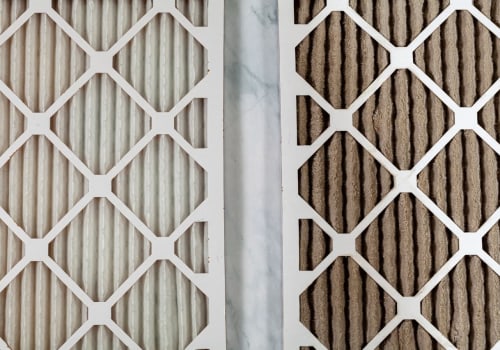
I have pulled hundreds of these filters out of homes, and the gray, packed-solid ones always tell the same story. The blower is worn out and the house stays dusty, usually because nobody realized the slot held that much power over the air. Treat it right and you get cleaner air and better efficiency from a part most people never think about. The filter itself runs about 19.56 by 22 by 5.25 inches, so with the box sorted, the only call left is how high to climb the MERV scale and what you give up at each step.
After all those service calls, the choice comes down to three things: how much air your blower can move, how clean the air needs to be for the people inside, and what you want to spend across a year. Once you know how your system breathes, picking the right Goodman 20x22x5 air filters gets simple.
TL;DR Quick Answers
- For most homes, MERV 11 hits the sweet spot. If anyone deals with allergies, asthma, or smoke, climb to MERV 13.
- That deep 5-inch slot swallows a high MERV without choking airflow, so the worry that haunts thin filters mostly disappears here.
- Stick with MERV 8 only for a basic home or a tired, older blower.
- The filter measures about 19.56 by 22 by 5.25 inches. Plan to stay on a change schedule of roughly every 90 days.
Top Takeaways
- The 20x22x5 Goodman size measures about 19.56 by 22 by 5.25 inches and comes in MERV 8, 11, and 13.
- A higher MERV traps smaller particles, so stepping up helps you capture more airborne dust, climbing from roughly 90 percent at MERV 8 to about 98 percent at MERV 13.
- Because the media sits 5 inches deep, your Goodman can run a high MERV with barely any airflow penalty, which a 1-inch panel cannot promise.
- Reach for MERV 8 and reliable dust defense in a basic home, MERV 11 for pets or mild allergies, and MERV 13 when allergies, asthma, or smoke are in the picture.
- Swap a 5-inch filter about every 90 days, and keep spare filters on hand if you have pets or a dusty season coming.
What MERV actually measures
MERV, short for Minimum Efficiency Reporting Value, simply rates how small a particle an air filter can grab. Home filters land between 1 and 16, and the higher the number, the finer the catch. A bargain panel sits near the bottom. A MERV 13 sits near the ceiling of what a house can run.
Here is the part most product pages skip. EPA guidance on home air cleaners points out that filters in the MERV 7 to 13 range come close to true HEPA at clearing most of the particles floating around your home, while letting your fan pull air far more easily than a dense HEPA would. For a house, that window is the sweet spot.
The case for a lower MERV (MERV 8)
A MERV 8 in this size grabs roughly 90 percent of the bigger airborne particles, the dust, lint, and pollen that cake onto your coils and dull the air at home. I reach for it when nobody in the house fights allergies or asthma, no pets are shedding into the return, and the blower is old enough that I would rather not lean on it. You get everyday dust protection at the lowest price and the least drag on airflow, which keeps a tired system breathing easy.
Its weakness shows up with the fine stuff. A MERV 8 does little against smoke, fine soot, or the smallest allergens, so it leaves anyone who reacts to those exposed.
The case for a higher MERV (MERV 13)
A MERV 13 in a 5-inch slot is where this size earns its money. It pulls in around 98 percent of airborne particles and reaches all the way down to smoke, fine dust, and droplets small enough to carry a virus. Cleaner air at that level can even help reduce hidden health risks from the fine particles a basic filter waves right through, which matters in homes with allergies, pets, or anyone whose lungs irritate easily.
The trade is small: a little more airflow resistance and a higher price per filter. On a healthy Goodman with a true 5-inch cabinet, that resistance rarely amounts to anything you would notice, and I will explain why next.
MERV 11 sits in the middle
Want more muscle than a MERV 8 without going all the way to 13? A MERV 11 captures about 95 percent of airborne particles and handles pet dander and most allergens without complaint. It is the rating I pick most often for an ordinary family home, and the deeper pleats give you longer-lasting pleated filtration between swaps.
Why this size handles high MERV better than a thin panel
This is the point that flips the whole decision. A 1-inch filter holds barely any media, so pushing it to MERV 13 can strangle airflow and spike the static pressure your blower has to fight. A 5-inch filter packs deep pleats with far more surface area, so that same MERV 13 spreads the air across much more material and barely taxes the fan.
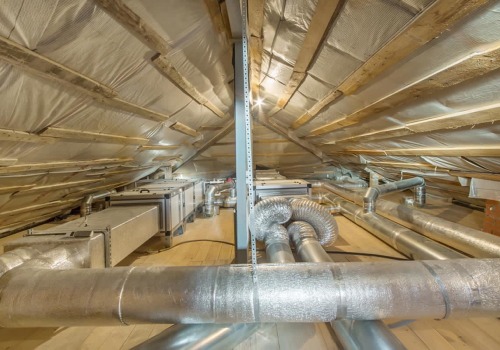
The filter shapes airflow more than people expect. When it is dirty or too restrictive, it slows the air your system can move and makes the blower work harder, which the U.S. Department of Energy notes drives up energy use and wears equipment out faster. If your vents whistle or rooms feel starved for air, check whether you also need to seal up leaky ducts, since the filter is only one piece of how your system breathes.
Matching the rating to your home
- A standard home with no allergies and no pets: MERV 8 has you covered.
- A family with a pet or mild allergies: MERV 11 fits.
- Allergies, asthma, smoke, or anyone with sensitive lungs: MERV 13.
Whatever you land on, settle into a regular replacement routine. Most 5-inch filters carry about a 90-day rating, though heavy runtime, pets, and dust can shorten that fast.
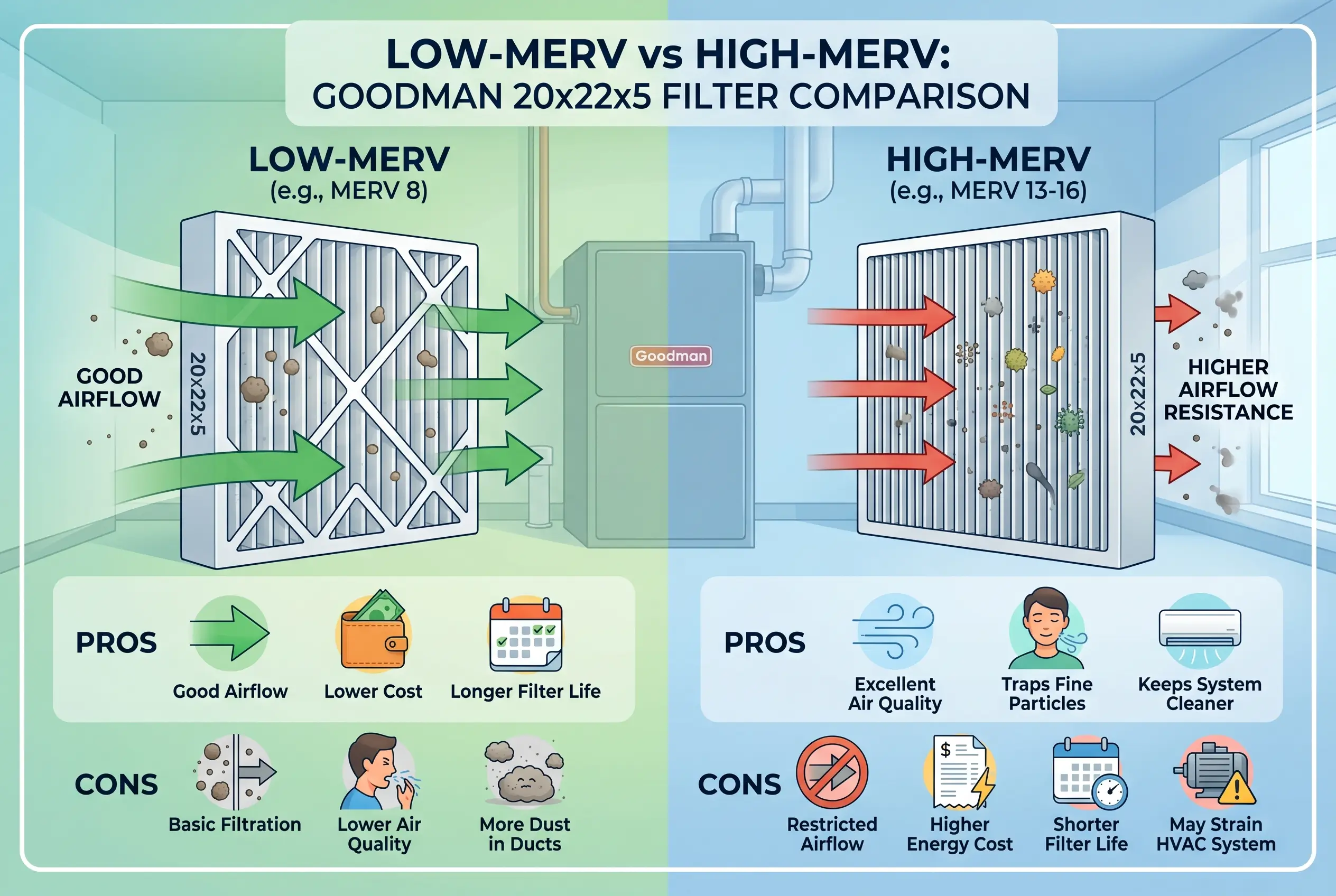
“In a 5-inch cabinet, the airflow fear that scares people away from MERV 13 really belongs to thin one-inch filters. With this much depth, you get top-tier capture and your blower barely notices, as long as you stay on a 90-day swap.”
Seven Trusted Sources to Help You Choose with Confidence
- EPA: Air Cleaners and Air Filters in the Home lays out, in plain language, how to pick a furnace or HVAC filter.
- CDC NIOSH: Improving Air Cleanliness explains when and why to raise your HVAC filter efficiency.
- ENERGY STAR: Heat & Cool Efficiently shows how a filter's condition affects airflow and your energy bill.
- U.S. Department of Energy: Operating and Maintaining Your System covers routine filter changes and the real cost of skipping them.
- American Lung Association: Air Cleaning gives a clear, health-first take on MERV and home filtration.
- DOE Building America: High-MERV Filters walks through the engineering behind MERV ratings and pressure drop.
- NIH (AAAAI): Air Filters and Air Cleaners offers a peer-reviewed look at filtration and allergen control.
Three Numbers Worth Knowing Before You Decide
- A common MERV 8 catches only about 20 percent of the smallest particles tested, while a MERV 13 catches at least 50 percent of those fine particles and 85 percent of the next size up, according to CDC NIOSH ventilation data.
- The filter by itself can account for roughly 20 to 50 percent of a system's total pressure drop, which is exactly why depth matters so much for airflow, per DOE Building America research.
- Americans spend about 90 percent of their time indoors, where some pollutants run two to five times higher than outside, reports the American Lung Association.
My Honest Take on the Right Call
If your 5-inch Goodman cabinet is in good shape, I lean toward MERV 13 for most homes, full stop. The deep pleats hand you that high-end capture without the airflow headache the same rating causes in a thin panel, and cleaner air is the whole reason the filter exists. Pair it with a better-insulated home and tight ducts, and your system works less to keep everyone comfortable.
For the broad middle, say a family with a dog and the usual spring sniffles, a MERV 11 is the comfortable, sensible pick. And if the real problem is just remembering to swap it, a filter plan that fits your budget takes the date off your plate and keeps fresh media showing up on schedule.
Frequently Asked Questions
Does a higher MERV reduce airflow in a Goodman 20x22x5?
A little, but nowhere near what it would in a thin filter. The 5-inch depth gives the air a lot more pleated surface to slip through, so a MERV 13 here adds only mild resistance on a healthy system. If airflow still feels weak, the ductwork is usually the culprit, so it pays to keep your ductwork sound.
Will a MERV 13 fit my Goodman system?
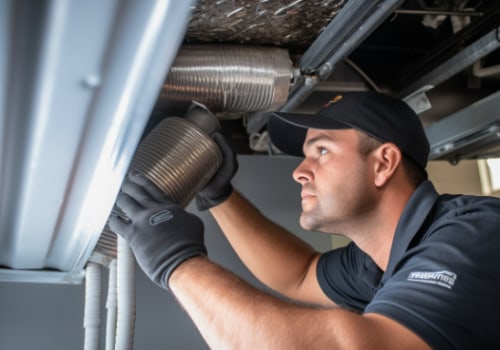
If your system runs a 20x22x5 media cabinet, MERV 13 comes in this exact size and drops right in. Confirm the cabinet is a true 5-inch slot, line the airflow arrow up with the airflow direction, and lean on a properly installed system check from a pro if you are not sure.
How often should I change a 5-inch filter?
Plan on about 90 days for normal use. Pets, allergies, construction dust, or a system that runs hard can pull that down to 6 to 8 weeks.
What is the actual size of a 20x22x5 filter?
The nominal 20x22x5 measures roughly 19.56 by 22 by 5.25 inches. Always check the size printed on your old filter frame before you order.
Is MERV 11 enough if I have pets?
For most pet owners, yes. A MERV 11 grabs around 95 percent of airborne particles, dander included, and keeps airflow comfortable. Move up to MERV 13 if someone in the home has allergies or asthma.
Match Your Filter to the Way You Live
The best rating is the one that fits your home, your family's health, and the system you already own, not whatever shows the biggest number on the shelf. Take a minute to match your needs to MERV 8, 11, or 13, and you will know exactly which filter belongs in that 5-inch slot.
Learn more about HVAC Care from one of our HVAC solutions branches…
Filterbuy HVAC Solutions - Miami FL - Air Conditioning Service
1300 S Miami Ave Apt 4806 Miami FL 33130
(305) 306-5027
https://maps.app.goo.gl/Ci1vrL596LhvXKU79