A little prep work before your HVAC installation can save hours of delays and hundreds in unexpected costs. We've seen homeowners in St. Cloud lose valuable time simply because a cluttered utility closet or overlooked electrical panel wasn't addressed beforehand.
St. Cloud's humid summers and unpredictable winters demand HVAC systems that perform from day one—and that starts with proper preparation on your end. Based on thousands of local installations, the homeowners who follow a simple pre-installation checklist consistently experience faster installs, fewer complications, and better long-term system performance.
This guide covers the exact steps our technicians recommend before installation day—so you can avoid common pitfalls and set your new system up for years of reliable comfort.
Quick Answers
HVAC Installation in St. Cloud
HVAC installation in St. Cloud, Florida requires a licensed contractor, a City of St. Cloud mechanical permit, and equipment suited for Central Florida's humid subtropical climate.
What you need to know:
Permit required: Yes—your contractor handles the application
Timeline: 4–8 hours for standard replacements
Utility provider: OUC serves St. Cloud residents
Available rebates: Up to $1,150 from OUC; up to $2,000 federal tax credit for heat pumps
License verification: Search Florida DBPR at myfloridalicense.com
From our experience: Homeowners who spend 30 minutes preparing—clearing work areas, confirming permits, and inspecting ductwork—consistently have faster installations and fewer surprise charges. St. Cloud's year-round cooling demands make proper installation critical to long-term system performance and energy efficiency.
Top Takeaways
30 minutes of preparation prevents hours of delays. Clear work areas, check your electrical panel, and inspect ductwork before installation day.
Verify contractor credentials before signing anything. Search the Florida DBPR license database and check BBB ratings to confirm licensing and insurance.
Duct sealing can cut heating and cooling costs by up to 20%. Address leaks before your new system goes in to get full performance from day one.
Federal tax credits and OUC rebates can save you thousands. Heat pumps qualify for up to $2,000 in federal credits. OUC offers up to $1,150 for qualifying equipment.
Communication makes the difference. Schedule a pre-installation walkthrough, confirm permits, and stay available on installation day.
What to Do Before Your HVAC Installation
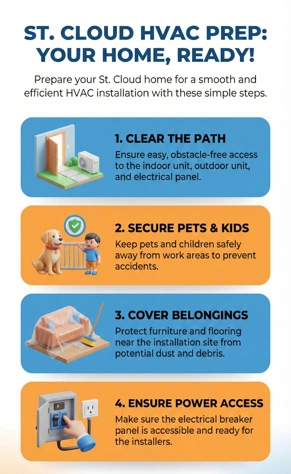
Start by clearing work areas both inside and out. Technicians need at least three feet of clearance around your existing unit and five to six feet outside where the condenser sits. Remove stored items, trim back vegetation, and create a clear path from your main entry to the equipment locations. We've seen installations delayed by an hour or more simply because homeowners underestimated how much space crews actually need to work.
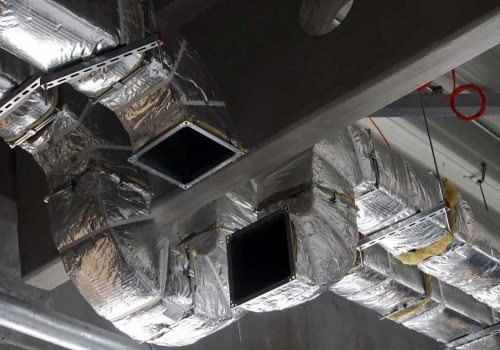
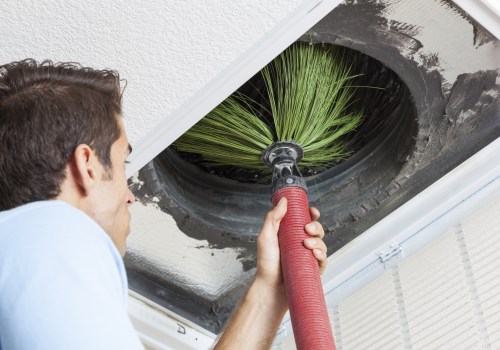
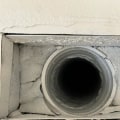
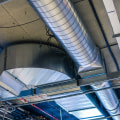
Check your electrical panel and existing ductwork ahead of time. Many St. Cloud homes built before the 1990s have panels that weren't designed for today's high-efficiency systems, and identifying upgrade needs early prevents last-minute scheduling conflicts. If you have existing ducts, inspect accessible sections for visible damage or disconnected joints—flagging obvious issues helps your installer plan accordingly and keeps the project on schedule.
Finally, secure pets in a closed room, confirm permit status with your contractor, and protect nearby furniture with drop cloths. A quick conversation with your installer a few days beforehand clarifies expectations, answers lingering questions, and ensures both sides are prepared for a smooth installation day.

"In over 15 years of installing HVAC systems across St. Cloud, the homeowners who take 30 minutes to prep their space almost always have faster installs and fewer surprise charges—it's the simplest thing you can do to protect your investment."
Essential Resources for HVAC Installation in St. Cloud
Verify Local Permit Requirements Before Installation
The City of St. Cloud Building Permit Portal provides official permit applications, inspection scheduling, and compliance documentation for HVAC installations. Confirm requirements early to avoid project delays or code violations.
Source: City of St. Cloud, Florida – Official Website https://www.stcloudfl.gov/50/Permit-Information
Confirm Your Contractor's Florida License Status
The Florida DBPR License Verification Tool lets you search any HVAC contractor by name or license number to confirm active credentials. Hiring unlicensed contractors can void equipment warranties and leave you liable for substandard work.
Source: Florida Department of Business and Professional Regulation https://www.myfloridalicense.com/wl11.asp
Check Contractor Ratings and Complaint History
The BBB Accredited Contractor Directory for Florida displays business ratings, customer reviews, and complaint records for HVAC companies. Filter by accreditation status to find contractors who meet BBB trust standards.
Source: Better Business Bureau https://www.bbb.org/us/fl/category/air-conditioning-contractor/accredited
Claim Up to $1,150 in Local Utility Rebates
OUC's Residential Rebate Program offers St. Cloud homeowners cash-back incentives for qualifying heat pumps, duct repairs, and insulation upgrades. Rebates appear as credits on your utility bill within 4–6 weeks of approval.
Source: Orlando Utilities Commission https://www.ouc.com/solutions-programs/savings/rebates/
Save Up to $2,000 with Federal Tax Credits
The IRS Energy Efficient Home Improvement Credit covers 30% of qualifying HVAC equipment and installation costs through December 31, 2025. Heat pumps qualify for up to $2,000; central air conditioners qualify for up to $600.
Source: Internal Revenue Service https://www.irs.gov/credits-deductions/energy-efficient-home-improvement-credit
Find Tax-Credit-Eligible HVAC Equipment
The ENERGY STAR Certified Product Finder database identifies heat pumps and central air conditioners that meet federal efficiency requirements. Use this tool to verify equipment qualifies before purchasing.
Source: U.S. Environmental Protection Agency https://www.energystar.gov/productfinder/product/certified-central-heat-pumps/results
Discover All Available Rebates in Your Area
The ENERGY STAR Rebate Finder aggregates utility rebates, manufacturer promotions, and state incentives by zip code. Enter your location to see every available discount on qualifying HVAC equipment.
Source: U.S. Environmental Protection Agency https://www.energystar.gov/rebate-finder
Supporting Statistics
These numbers from federal research agencies confirm what we see every day on job sites across St. Cloud—proper preparation and quality installation deliver measurable results.
Heating and Cooling Consume Over Half of Household Energy
The U.S. Energy Information Administration reports that space heating and air conditioning account for 52% of annual home energy consumption.
We've watched homeowners cut their largest monthly expense by investing in proper installation. When HVAC represents more than half your energy bill, every detail matters:
Duct sealing and insulation
Electrical panel capacity
Correct system sizing
Quality installation practices
Source: U.S. Energy Information Administration https://www.eia.gov/energyexplained/use-of-energy/homes.php
Duct Sealing Can Reduce Heating and Cooling Costs by Up to 20%
The U.S. Department of Energy's Building America program found that duct sealing alone saves up to 20% on heating and cooling costs.
In our experience, most St. Cloud homeowners underestimate how much conditioned air escapes through older ductwork. Common issues we find during pre-installation inspections:
Disconnected joints in attics and crawlspaces
Gaps at register connections
Deteriorated flex duct sections
Missing or compressed insulation
Addressing these problems before your new unit goes in ensures full-capacity performance from day one.
Source: U.S. Department of Energy, Building Technologies Office https://www.energy.gov/eere/buildings/articles/building-america-technology-solutions-new-and-existing-homes-duct-sealing
High-Efficiency Heat Pumps Deliver Up to 3x More Energy Than They Consume
ENERGY STAR data shows air-source heat pumps can deliver up to three times more heat energy than the electrical energy they consume.
We've installed hundreds of these systems in Central Florida. Homeowners who followed our pre-installation checklist consistently report the biggest utility bill drops. However, efficiency gains depend on:
Proper system sizing using Manual J calculations
Correct refrigerant charge and airflow
Sealed and insulated ductwork
Adequate electrical infrastructure
The efficiency is real—but only when installation is done right.
Source: U.S. Environmental Protection Agency, ENERGY STAR https://www.energystar.gov/products/air_source_heat_pumps
Final Thought
Preparing your home for HVAC installation in St. Cloud isn't complicated—but it makes a significant difference in how smoothly your project goes and how well your new system performs.
The basics take minimal effort upfront:
Clear work areas inside and out
Check your electrical panel capacity
Inspect existing ductwork for visible issues
Confirm permits with your contractor
When heating and cooling account for over half your home's energy consumption, every decision directly impacts your comfort and your wallet for years to come.
Our honest take after thousands of installations across St. Cloud and Central Florida: The homeowners who invest 30 minutes in preparation almost always have better outcomes. We've seen the patterns repeatedly:
Brand-new high-efficiency systems underperforming because nobody checked the ductwork beforehand
Installation timelines doubling because an outdated electrical panel wasn't flagged until the crew arrived
Unexpected charges adding up when simple issues could have been addressed in advance
The difference between a smooth installation and a frustrating one usually comes down to three things:
Communication with your contractor before installation day
Walking through work areas yourself
Verifying permits are handled
These steps cost nothing but save hours of headaches and hundreds in unexpected charges.
St. Cloud's climate demands reliable heating and cooling year-round. Treat the preparation process with the same attention you'd give any major home improvement—the payoff is a faster installation, fewer surprises, and consistent comfort from day one.
Next Steps
Follow these steps to ensure a smooth HVAC installation in St. Cloud.
1. Schedule a Pre-Installation Walkthrough
Contact your contractor 5–7 days before installation to confirm:
Work area access requirements
Electrical panel capacity
Ductwork condition
Project timeline
2. Verify Contractor Credentials
Before signing any agreement:
Search the Florida DBPR database at myfloridalicense.com
Check BBB ratings and complaint history
Request proof of insurance
Ask for local references
3. Clear Work Areas
Prepare your home 24–48 hours ahead:
Remove items within 3 feet of indoor equipment
Trim vegetation within 5–6 feet of outdoor unit location
Create a clear path to all work zones
Cover nearby furniture with drop cloths
4. Confirm Permits and HOA Approval
Avoid last-minute delays:
Verify your contractor pulled City of St. Cloud permits
Secure HOA approval for exterior equipment
Confirm inspection scheduling
5. Explore Rebates and Tax Credits
Maximize savings before purchasing:
Check OUC rebates at ouc.com/rebates
Review federal tax credits at energystar.gov
Request ENERGY STAR certified equipment options
Keep all receipts for tax filing
6. Prepare for Installation Day
Set yourself up for success:
Secure pets in a closed room
Designate a decision-maker to stay available
Clear your schedule for 4–8 hours
Keep your contractor's number accessible
FAQ on "HVAC Installation in St. Cloud"
Q: Do I need a permit for HVAC installation in St. Cloud?
A: Yes. The City of St. Cloud requires a mechanical permit for all HVAC installations, replacements, and alterations.
What to know:
Your licensed contractor typically handles the permit application
Confirm permit status 3–5 days before installation
We've seen projects halt mid-installation when permits weren't verified beforehand
A quick phone call prevents costly delays.
Q: How do I verify my HVAC contractor is licensed in Florida?
A: Search the Florida DBPR database at myfloridalicense.com by name or license number.
Signs of a reputable contractor:
License number displayed on trucks, website, and estimates
Willingness to provide credentials upfront
Active State Certified or State Registered license
Red flag: If a contractor hesitates to share licensing details, walk away. We've seen homeowners stuck with voided warranties after hiring unlicensed installers.
Q: What rebates are available for HVAC installation in St. Cloud?
A: St. Cloud residents served by OUC have multiple savings options.
Current incentives:
OUC rebates: Up to $1,150 for qualifying heat pumps
OUC additional incentives: Duct sealing and insulation upgrades
Federal tax credit: Up to $2,000 for heat pumps through December 31, 2025
Federal tax credit: Up to $600 for central air conditioners
Important: Equipment must be ENERGY STAR certified to qualify. We help homeowners navigate these programs regularly—purchasing non-qualifying equipment means missing out entirely.
Q: How long does a typical HVAC installation take?
A: Most straightforward replacements take 4–8 hours.
Factors that extend timelines:
Outdated electrical panels requiring upgrades
Hidden ductwork damage discovered during installation
Access problems not addressed beforehand
First-time central air or major ductwork modifications
We've seen timelines double when these issues arise unexpectedly. Homeowners who complete our pre-installation checklist consistently experience faster installations.
Q: How should I prepare my home before HVAC installation?
A: Preparation takes about 30 minutes and saves hours on installation day.
Essential steps:
Clear 3 feet around indoor equipment
Clear 5–6 feet around outdoor unit location
Create a path from main entry to all work zones
Cover nearby furniture with drop cloths
Secure pets in a closed room
Designate a decision-maker to stay available
Based on thousands of installations across St. Cloud, the most common delays we encounter are cluttered work areas and unsecured pets.
Here is the nearest branch location serving the Palm Beach Gardens FL area…
Filterbuy HVAC Solutions - West Palm Beach FL
1655 Palm Beach Lakes Blvd ste 1005, West Palm Beach, FL 33401
(561) 448-3760